
The SAP clock is ticking: Why top management must be involved from the start
The advert is produced by Børsen Creative in collaboration with SOA People, November 2024

A significant obstacle lies further down the road for companies using SAP as their platform. And IT managers are well aware: In 2027, support for the current SAP ECC platform expires, and deadlines like that are not something to be taken lightly when you think of the ECC platform as a kind of control tower for the company that monitors and ensures that all activities run smoothly.
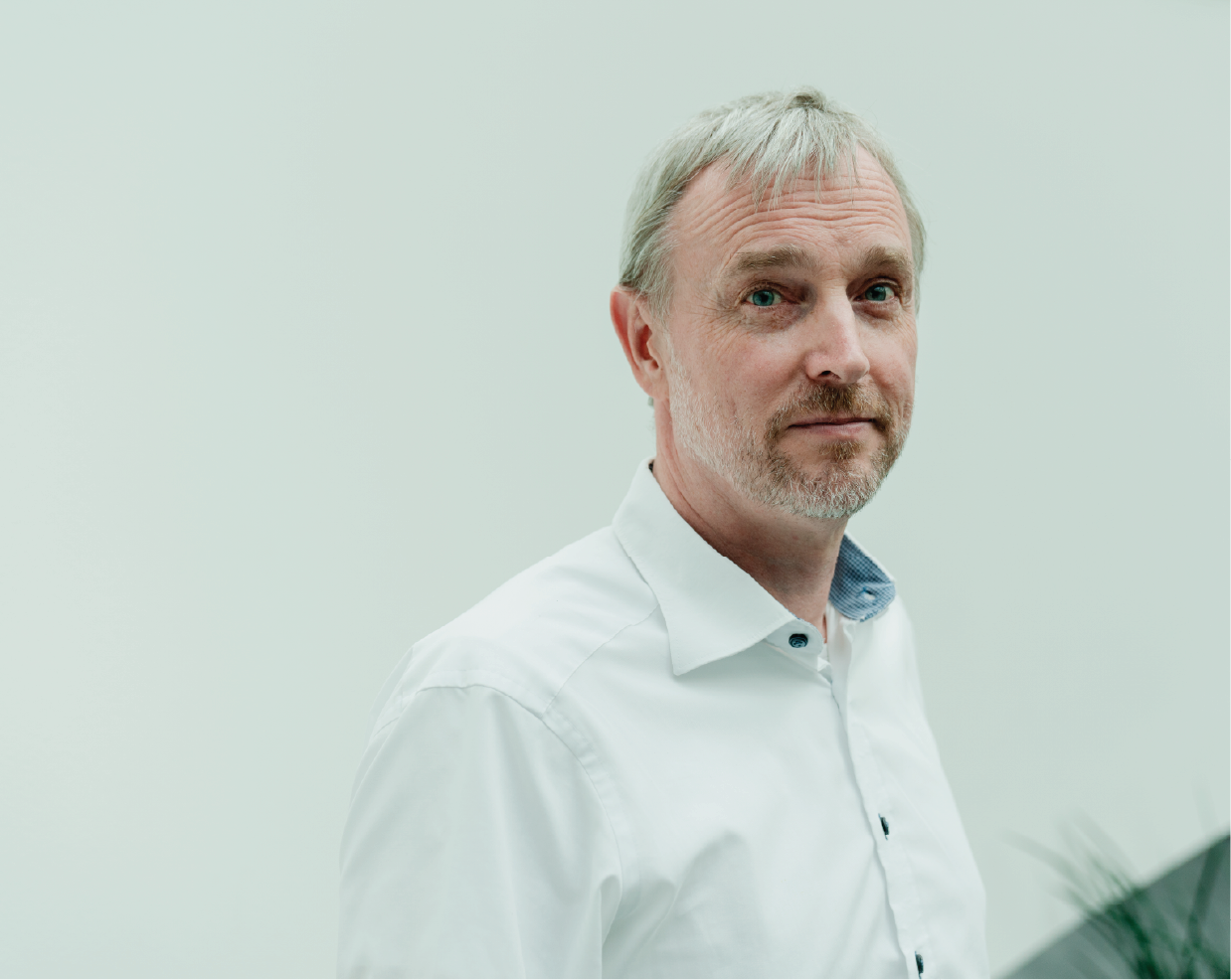
But the decision extends far beyond just upgrading a piece of software, and therefore, it shouldn’t be left solely to the IT managers, says Lars Bork Dylander, CEO of the consultancy 2BM, Part of SOA People, which assists companies with SAP migrations. According to him, there is so much at stake that top management must be involved from the outset.
“SAP is so pervasive that an upgrade will impact every department. Purchasing, warehouse, HR, finance, and production.”
Much more than an upgrade
But the new version of SAP is not just a code replacement. It’s a business upgrade that provides companies with new competitive opportunities.
“The old SAP engine has roots going back to the 90s, and with the new SAP platform, known as S/4HANA, companies are transitioning to entirely new cloud technologies with web interfaces, artificial intelligence, and new ways of working – it’s a new ‘iPhone moment’ in business operations. The changes are so extensive that top management should take an interest and relate to the new way of doing business.”
Although Lars Bork Dylander both advises on and sells SAP solutions, he doesn’t sugarcoat it when discussing the core of SAP:
“The old system that companies use today was, as mentioned, conceived in the 90s, and you can easily tell just by glancing at the user interface,’ he says with a smile.”
“In the past, employees had to complete a heavy training to learn how to use SAP. With SAP S/4HANA, the employee gets an entirely new user interface that presents information relevant to their role. It’s much more intuitive and easy to navigate, while artificial intelligence offers business solutions and supports users in making decisions at the right steps.”
Through the windshield, not the rearview
The current SAP system ensures fundamental management of all essential business processes – from purchasing and production to sales and finance. A system, says Lars Bork Dylander, that has always been distinguished as a real-time solution, where business transactions are instantly reflected.”
But the real-time updates simply haven’t been reflected in reports and summaries. He offers an example:
“In logistics, MRP (Material Requirements Planning) is the cornerstone of everything from procurement to distribution, and it often involves complex calculations that used to be run overnight or on weekends. In SAP S/4HANA, these calculations run as “Live-MRP,” enabling the system to respond instantly if issues arise in supply or production – for instance, if a container ship were to get stuck in the Suez Canal.’”
He continues: ‘Because there is always live data everywhere, the system can now react immediately and suggest another supplier or another way to get the goods to customers in time.’
The same agile benefits are also available in financial management. Whereas today, in order to create the most accurate picture of the company’s finances, you often struggle to finalise monthly accounts as quickly as possible, with live data, you will get a real-time prediction and thus be able to react much faster if needed.
“You could say that companies always looked in the rear-view mirror to see where they were going. With the new intelligent systems, they can finally look out the windscreen to set their course,” summarises Lars Bork Dylander.

CEO SOA People Denmark
”You could say that companies have always been looking in the rearview mirror to see where they were headed. With the new intelligent systems, they can finally look through the windshield.”
Andel: It was not an IT exercise
Conny Thorsted was Head of Department at Andel at the time of the interview, one of the country’s largest energy companies with 1.2 million customers and a turnover in the billions. In this role, she was responsible, among other things, for the company’s SAP platform, which has just been upgraded to the S/4HANA version of SAP. And Conny Thorsted fully agrees with Lars Bork Dylander when he points out that top management must be involved from the start.
“We’ve had members of the management team on the steering committee, and they’ve put a lot of effort into securing support for the project so that resources have been freed up. This has been a crucial parameter for success, and it has in no way been an IT exercise,” she says.
A 1-to-1 upgrade not realistic
Andel provides a multitude of services from electricity and internet access to distribution and meter reading. The different companies are governed by different legislation, which makes every upgrade of the SAP system a complicated affair.
“We have two companies – Cerius and Radius – that needed to streamline their procedures. For this reason alone, we realised right from the start that we needed to change a lot of procedures. So there was never any question of doing a 1-to-1 upgrade of SAP. It was obvious to take the opportunity to create greater synergy between the different companies in the group,” explains Conny Thorsted.
Andel employees will also have a new interface that is role-based and much more similar to a normal web interface. This way, employees only have access to the functions and data that are relevant to their job.
“This has been a crucial parameter for success, and it has in no way been an IT exercise“
“The old SAP user interface is incredibly efficient, but required you to memorise a lot of transaction codes. It might be efficient if you do the same things all the time. But the new interface is much more modern and easier to understand. That means a lot when we have to train new employees,” says Conny Thorsted.
Former Head of Department at Andel
”This has been a crucial parameter for success and it has in no way been an IT exercise….The old SAP user interface is incredibly efficient, but it required you to memorise a lot of transaction codes. It might be efficient if you do the same things all the time. But the new interface is much more modern and easier to understand. That means a lot when we have to train new employees”
Into a safe cloud
Andel also chose to outsource the operation of their SAP platform to RISE, which is operated by SAP. This provides flexibility and the ability to scale IT solutions as needed.
For Andel, the choice was mainly characterised by security considerations, but the solution also includes the ability to pick tools from an entire digital toolbox.
“Our entire distribution business and thus the entire operation of the electricity grid in most of Zealand depends on our SAP system, so it’s not something to joke about. When it’s with SAP, it’s under lock and key to a completely different degree than we could take care of ourselves,” concludes Conny Thorsted.
Want to know more about the business benefits of SAP S/4HANA?
Fill in the form or give us a call on
+45 3555 5575