

What Does This Mean for Your Business?
- Electronic Invoices: The new Bookkeeping Act requires that all invoices exchanged between businesses be sent electronically in a standardised format. This will help your company reduce the risk of errors while making invoice management more efficient.
- Digital Communication with Authorities: The new Bookkeeping Act requires companies to communicate digitally with public authorities, including the electronic submission of VAT and tax information.
- Accessibility: The new Bookkeeping Act requires all accounting records to be easily accessible to external auditors, ensuring transparency and control throughout the accounting process.
- Retention Requirements and Backup: The new Bookkeeping Act requires all accounting records to be stored and securely backed up for a period of five years. As a result, companies will face increased requirements regarding the volume of data that must be stored digitally.
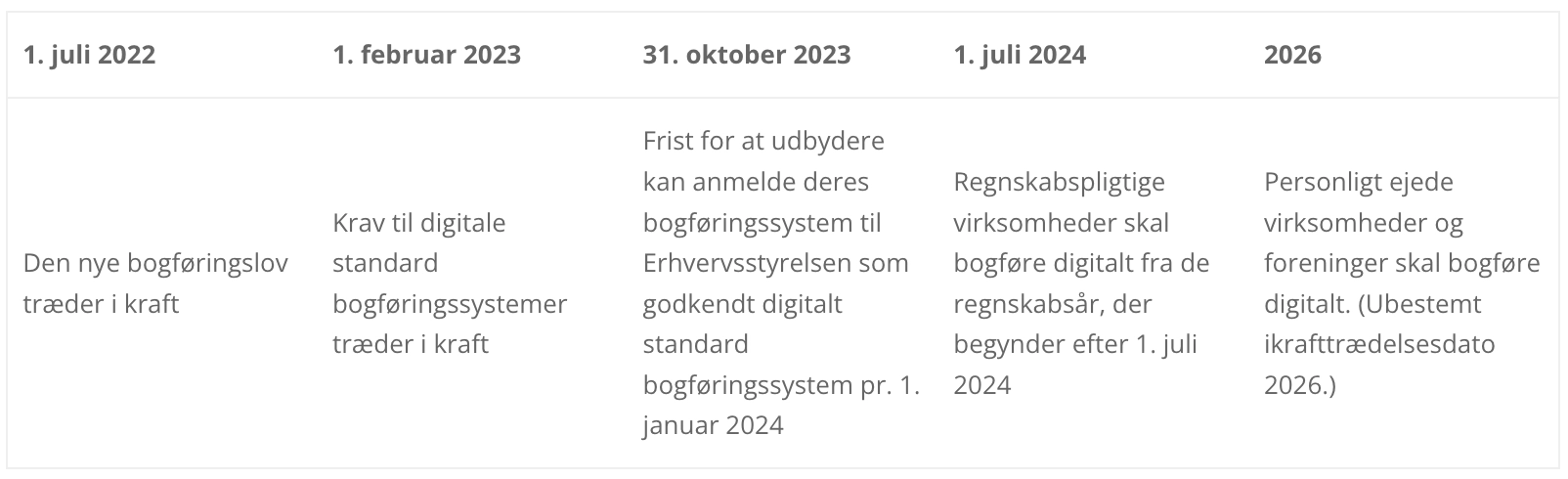
Timeplan


Contact our SAP Service to get started with digital bookkeeping in SAP
Fill in the form or give us a call on +45 3555 5575